
We may earn money or products from the companies mentioned in this post.
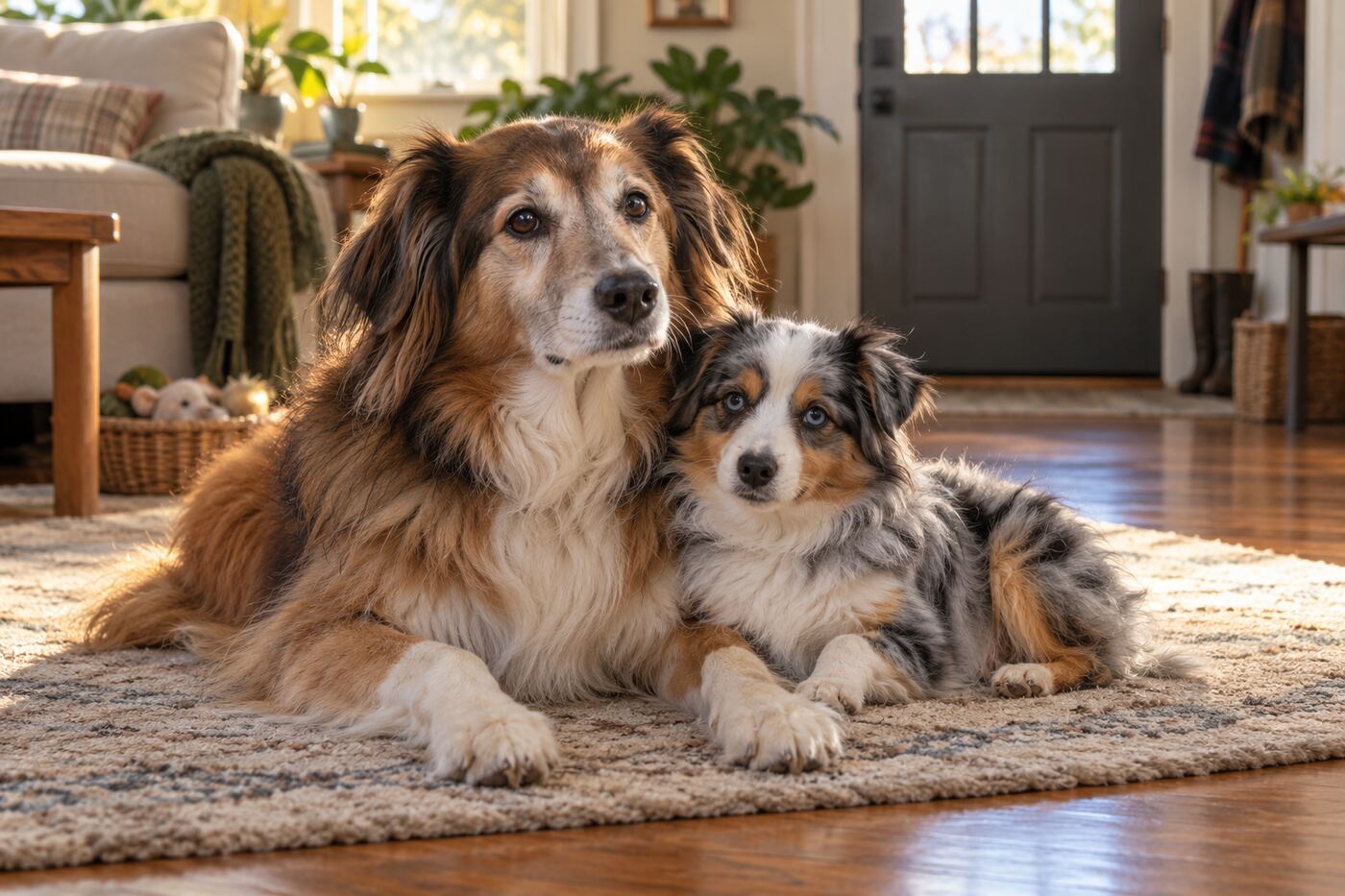
I have owned dogs for most of my life, but two of them taught me just how differently anxiety can show itself. One tried to tear her way out of our house to find us. The other can become tense and reactive around other dogs.
Neither experience has been simple. Both have made me more patient and more careful about looking beyond the behavior in front of me.
The rescue dog who tried to follow us
My first real experience with an anxious dog began when our family rescued a collie-cocker spaniel mix from a local group that regularly takes in dogs. She was already a few years old when she came to us.
She was incredibly friendly, but it was clear that life had not always been easy for her. We did not know much about her history, and we were still learning who she was.
A few days after bringing her home, we left her alone for the first time. When we returned, she had chewed the trim around the doors while trying to get out of the house.
At first, the damage was the obvious problem. Later, we came to understand what was underneath it. She was not trying to be destructive or punish us. As best we could tell, she was trying to come find us.
She became our most loyal dog
That same dog became the most loyal dog our family has ever had. She stayed close, watched over us, and became deeply attached to everyone in the house. She lived a long life and became a huge part of our family.
Her anxiety did not disappear overnight. For a long time, leaving her was hard. We had to learn her signals and understand that the behavior came from fear and attachment, not stubbornness.
The smaller dog who helped her settle
Things began to change after we brought home a smaller dog. She was cautious around him at first. She did not immediately know what to make of this new little animal sharing her space.
Eventually, she learned to love him. As their relationship grew, we noticed that some of her anxiousness began to come down. Having another dog nearby seemed to give her companionship and reassurance.
I would not assume that getting another dog is the answer for every anxious dog. In our family, though, that relationship made a meaningful difference for her.
Our toy Aussie shows anxiety differently
A few years ago, we got our first super tiny dog, a toy Australian shepherd. His challenges look very different.
With him, anxiousness sometimes seems to come out as aggression toward other dogs. He has never directed it toward people. Around dogs, though, he can become reactive. Sometimes he simply seems to be in a mood. Other times, his whole body and behavior make him seem generally anxious.
That has been tricky because the outward behavior is louder and easier to judge. It can look like anger when there may also be fear, uncertainty, or overstimulation underneath it. I cannot know exactly what he is feeling, but thinking about the anxiety behind the reaction helps us respond with more patience.
What these dogs have taught me
- Anxiety does not look the same in every dog. One dog may destroy a door trying to follow you. Another may bark or lunge when another dog gets too close.
- The behavior is not the whole story. Damage and reactivity are problems that need to be managed, but they can also be signs that a dog is struggling.
- Trust can take time. Our rescue dog’s first days did not predict the loyal companion she became.
- Companionship can matter. Another dog appeared to help our collie-cocker mix, even though she was unsure about him at first.
- There is rarely one simple fix. Every dog, home, and situation is different.
Why I started Anxious Dog Guide
These experiences are a big part of why I created Anxious Dog Guide. I know what it is like to come home to damaged trim and wonder what happened. I also know what it is like to manage a tiny dog whose nervousness can turn into a difficult interaction with another dog.
I am not a veterinarian or professional dog trainer. I am a longtime dog owner trying to understand these behaviors, make better choices, and share what I learn. The site will look at practical routines, products, and guidance that may help owners care for anxious dogs with more understanding.
You can read more about this site or see our research-based Pet Releaf Stress Releaf Edibites review.
If a dog is showing aggression, panic, destructive escape attempts, or behavior that could cause injury, a veterinarian or qualified behavior professional can help assess the situation and build a safer plan.